Are your kids scared about money?
During volatile times like these it’s easy to worry about your money, question what the right next move should be, and wonder what the future will bring. As I wrote about in my last blog post, worry is about the worst thing you can do in uncertain times. It leads to bad decisions among other issues. If you have children, it’s even more important to be very deliberate when it comes to your response.
I know you know this … your kids learn from what they see you do and hear you say. Money is no exception. They are picking up your cues. If you are fighting with your partner, they pick that up. If you’re wringing your hands, making comments about how scary things are, they pick that up. They are smart. Even if you say everything will be fine, but you don’t actually believe that it will be, they pick that up too.
All the time, but especially in times of uncertainty, be conscious of money messages you communicate with your children.
Here are some ideas of how to support your kids to be financially resilient:
- Be discerning with your media consumption – If you have the financial news playing in the background all day long not only will this likely make you more anxious and confused, it will send a message to your kids that investments are scary, money problems are coming, and that this will somehow negatively affect them. Now it very well may affect them based upon your individual situation, but better you communicate this in an age appropriate way. If you want to check in on the markets, or research an area of concern, consider doing this in a room away from your kids or online. This doesn’t just help your kids. Limiting your exposure to the news can help you as well. Think of too much news like sugar. A little bit is okay, but too much will make you cranky, lose sleep and bark at people you love.
- Be age appropriately honest – If your family needs to be making changes based upon a financial setback, talk about it. People are weirdly secretive about money and it’s not always helpful. Sometimes we all need to cut back based upon our financial reality. That’s a great financially responsible lesson to teach your kids. If you do need to make some cut backs, this may be an opportunity to find fun and engaging free ways to spend time together. Bring family board game night back (or start it for the first time!)
- Give to others – whether your family is relatively unscathed through this period, or if you are more directly affected it is a
 beautiful opportunity to exemplify generosity. Find ways to help others during this time. Perhaps you have an elderly neighbor that needs you to run errands for her – have your kids join in. Here’s an example of what one group is doing in the Chicago area. Got extra toilet paper stock piled? Maybe someone near you is freaking out about this! And you can help.
Going forward here are some other resources for bring up money smart and prosperous kids –
Here’s my Tedx Talk on the surprising way to teach your kids about money: 
And here’s an article covering when to start allowance and how Steven and I worked with our kids. By all accounts they are financially responsible and generous young adults now, so something worked!
From ages earlier than you can imagine your kids are picking up money messages. Set them up for a healthy money mindset!
Every good wish,










 My mom and dad always made a big deal about getting me fun Valentine’s Day cards and sometimes even a little gift. For me it’s a holiday about all types of love and caring – not solely about romantic love as many see it.
 Clinging is bad for all relationships. Money likes to have fun with you. Go on that trip, enjoy that dinner out with friends, buy those tickets to see Hamilton! Money also likes balance – so remember to enjoy your money responsibly.



 I’ll fess up – I used to periodically get dinged for late payments on bills if I was traveling a lot or just busy. I almost always got these fees waived by calling the company, but that took time that could have been spent more efficiently. Perhaps you’re already doing this, but if not get your bills set up on auto pay. You’ll still need to check your bills to make sure they are correct (see Tip #7) but bye-bye late fees.
 Maybe you’re paying for a storage unit that you really don’t need. Ask, would you really care if everything in there was mistakenly sold on Storage Wars? So save the fees – sell or donate your stuff.
 Amazon charge. It was small, I hadn’t noticed it. One day when I was reconciling our accounts it occurred to me that he rarely buys anything on Amazon. For ten months I’d been paying this charge and it wasn’t legit. I called the credit card company, they took it off and credited me the amounts.
 have about $8,500. Where could we be going with that money?!
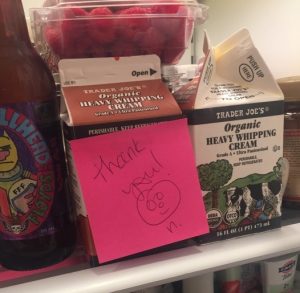
 Generosity is a physical manifestation of your gratitude. So start with the gratitude. For many, many years I’ve been writing “thank you” under my signature on my checks. I do it so automatically that I barely think about it. Why do I do this? To acknowledge my gratitude that I have the money to pay the bill or donate or for whatever reason I’m writing the check. If you don’t write checks any longer, you can add this to the memo box on a virtual payment or simply say it out loud as you hit enter. Be grateful for what flows in and what flows out – this is an easy practice to move your mindset from scarcity to abundance and prosperity.